At River Ivel Community Energy (RICE), we’re committed to practical, local action on climate change. From helping households reduce energy bills to supporting solar power on schools and community buildings, we’re working to build a future that’s cleaner, fairer, and more affordable.
However, as more solar projects are proposed across the UK, some conversations—particularly online—have become increasingly heated. We’ve seen a rise in misinformation and exaggerated claims about what solar farms are and what they mean for our countryside.
Let’s set the record straight by addressing common myths and concerns about large-scale solar, backed by facts.
“They’re an eyesore.”
Yes, solar farms are visible—but compared to many other types of development, they’re remarkably low impact.
- Panels are typically no taller than 3 metres (about the height of a garden fence).
- They don’t move, make noise, or release emissions.
- Well-designed solar farms incorporate hedgerow planting and wildlife corridors to blend into the landscape.
It’s worth noting that our rural landscape already includes electricity pylons, motorways, and warehouses. Solar panels are a passive, silent presence—often hidden from view within weeks of planting.
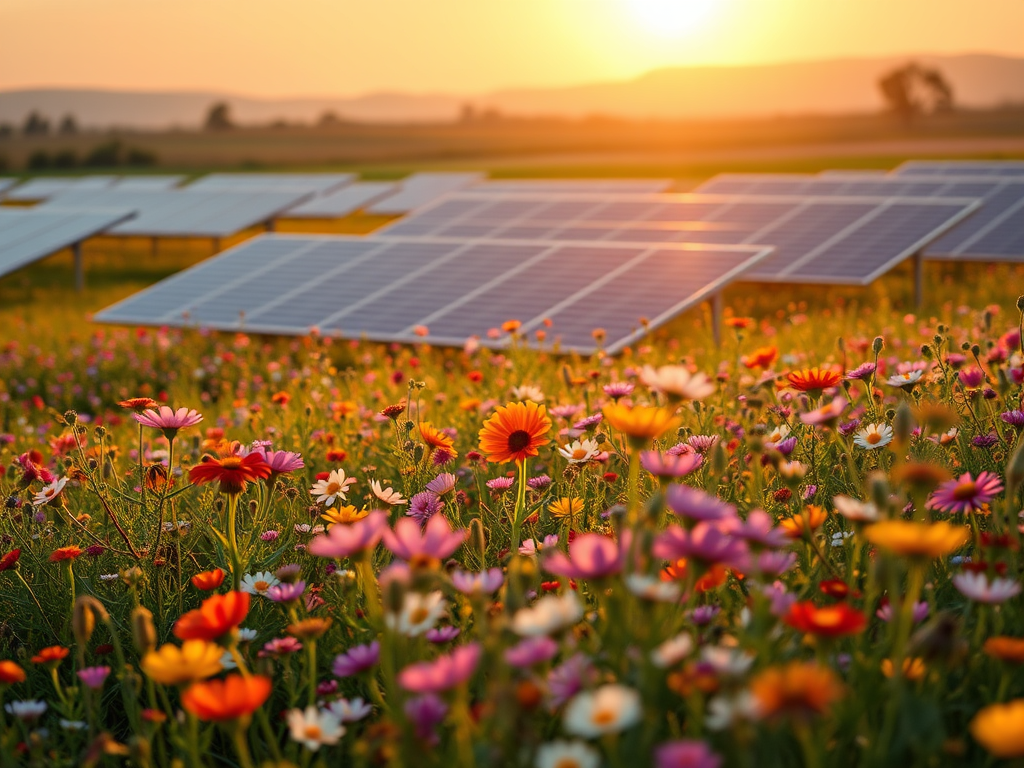
🌿 Bonus fact: Solar farms can create excellent conditions for wildflowers, bees, butterflies, and ground-nesting birds. Many are managed specifically for biodiversity gains.
“They’re taking up valuable farmland.”
This claim is often repeated—but let’s examine the numbers.
To meet the UK’s net zero electricity target by 2050, it’s estimated that around 0.3% of the UK’s land would need to host solar energy infrastructure. This is less than half the area currently used for golf courses.
In many cases, solar is placed on lower-grade agricultural land (Grades 3b–5), which is less productive. Moreover, farmers often continue to graze sheep around the panels, supporting local food production and boosting income security.
🐑 It’s not a choice between food and energy. With smart planning, we can do both.
“The construction traffic will be a nightmare.”
This is a genuine concern in rural villages and deserves a straightforward answer.
Yes, solar farms generate construction traffic, especially in the initial months. However, the intensity and duration are significantly less than for housing developments or road schemes.
Typical construction time for a large solar farm is 3–6 months. Most heavy goods vehicle (HGV) movements occur in the first few weeks, delivering panels, mounting frames, and cabling. After that, traffic decreases dramatically.
To put it in context:
| Type of Development | Total Construction Time | Daily Peak HGV Movements |
| 40MW Solar Farm | 3–6 months | 10–20 per day (peak) |
| 100-home Housing Estate | 18–24 months | 30–50 per day (sustained) |
Solar construction sites are also cleaner—no brick dust, concrete batching, or piling. Once installed, there’s minimal ongoing vehicle traffic—just occasional maintenance visits, usually in a van.
🚚 Key point: Most solar sites are “build once, benefit for decades.”
Unlike housing, they don’t increase pressure on roads, schools, or surgeries. Once built, they quietly produce clean power—no fuss.
“It’s not even green.”
This is a common misconception. Solar energy is one of the cleanest, lowest-emission energy sources available.
- Manufacturing and transporting solar panels produce emissions, but these are offset within 1–2 years of operation.
- After that, panels continue producing clean electricity for 25–40 years.
- No fuel, no smoke, no waste—just sunlight and semiconductors.
Solar farms in the UK are effective—even on cloudy days. Germany, with less sunshine than southern England, has been powering millions of homes with solar for years.
☀️ Fact: A typical UK solar farm generates enough electricity to power thousands of homes.
“What happens when the panels wear out?”
This is a valid question—and one that’s increasingly easy to answer.
Solar panels are designed to last 25–40 years. When they reach the end of their life, they don’t go to landfill. In the UK, several companies specialize in recycling solar panels, recovering up to 95% of the materials for reuse. For example, SolRecycle, based in Manchester, offers such services.
The recycling process involves separating the glass, aluminium, and silicon components, which can then be used to manufacture new panels or other products. This not only reduces waste but also conserves valuable resources.
♻️ Good news: Solar panel recycling is real, growing, and part of a circular, sustainable energy system.
“It’s all just a scam for developers.”
We understand the scepticism toward large infrastructure projects. But let’s consider the broader picture.
The real issue is our reliance on fossil fuels—volatile prices, foreign supply chains, rising bills, and environmental degradation.
Solar energy, on the other hand:
- Locks in cheaper power prices for decades.
- Reduces our reliance on imports.
- Cuts emissions at the source.
- Creates local jobs in installation and maintenance.
When solar projects are developed with communities, not imposed upon them, they can bring real local benefits. At RICE, we support models where profits are reinvested into local energy-saving initiatives, fuel poverty support, and community funds.
💸 Community energy is about ownership, transparency, and fair returns—not windfall profits for outsiders.
Conclusion: It’s time to push back
Solar isn’t a silver bullet—but it’s one of the most effective, proven tools we have to reduce emissions, lower bills, and increase energy security.
Yes, it needs to be implemented thoughtfully—with community input, proper screening, and careful planning—but we can’t let misinformation stall progress. Our countryside needs climate solutions, not distractions.
Let’s build a future that works—for our communities, our climate, and future generations.
 River Ivel Community Energy